

Why Toyota Safety Sense™ Makes Every Michigan Drive More Confident
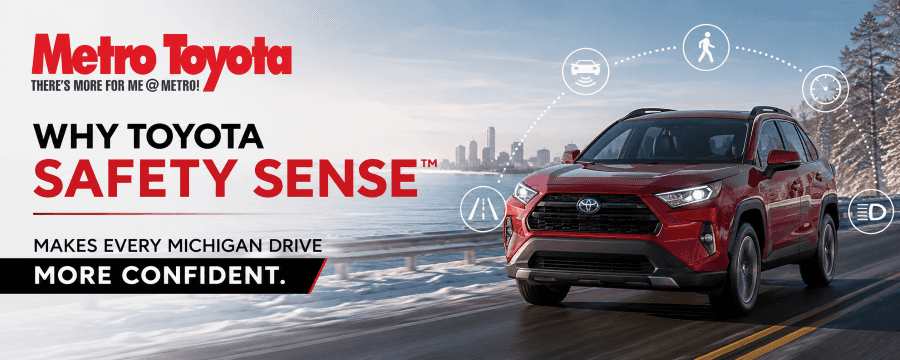
Why Toyota Safety Sense™ Makes Every Michigan Drive More Confident
Explore the driver-assistance technologies designed to support awareness, comfort, and confidence during commutes, family travel, and changing Michigan road conditions.
Advanced Support for Michigan Driving
Whether you are commuting through Kalamazoo, driving the family to Portage, or heading north for a weekend getaway, Michigan roads can bring snow, rain, construction, traffic, and wildlife crossings. Toyota Safety Sense™ includes driver-assistance technologies designed to help increase awareness and support attentive driving through many of these everyday situations.
Toyota Safety Sense™ at a Glance
Available systems can monitor the road ahead and provide alerts in certain situations.
Available features can help alert drivers to unintended lane movement.
Adaptive cruise technologies can help maintain a selected following distance.
Available systems can help identify certain road signs and lighting conditions.
What Is Toyota Safety Sense™?
Toyota Safety Sense™ is a collection of active safety technologies that use cameras, radar sensors, and vehicle systems to monitor certain road and traffic conditions. Features and system versions vary by model, trim level, and model year.
Helps identify lane markings, certain road signs, vehicles, and pedestrians.
Can monitor distance and closing speed in certain driving situations.
Provides visual or audible warnings when certain conditions are detected.
May provide braking, steering, or speed support under specific conditions.
Pre-Collision System with Pedestrian Detection
This system uses cameras and radar to help detect certain vehicles, pedestrians, and, in some situations, cyclists in front of the vehicle.
- Provides visual and audible alerts
- Monitors certain front-end collision risks
- May provide automatic braking assistance
- Helpful in traffic and busy intersections
- Supports attentive urban driving
Where This Feature May Help
- Busy Kalamazoo intersections
- School zones
- Pedestrian-heavy shopping areas
- Stop-and-go traffic
- Unexpected slowdowns
- Urban commuting
Lane Support Technologies
Lane Departure Alert with Steering Assist
Lane Departure Alert monitors visible lane markings and can provide a warning when the vehicle begins drifting without a turn signal.
On properly marked roads and under certain conditions, Steering Assist may provide gentle input to help guide the vehicle back toward the lane.
Lane Tracing Assist
When used with compatible cruise control on properly marked roads, Lane Tracing Assist may provide steering support to help keep the vehicle centered.
Drivers must remain attentive and keep their hands on the steering wheel while the system is operating.
Dynamic Radar Cruise Control
Traditional cruise control maintains a selected speed. Dynamic Radar Cruise Control can also help maintain a preset following distance from the vehicle ahead.
When traffic slows, the system may reduce vehicle speed. On certain models and under appropriate conditions, it may resume the selected speed as traffic begins moving again.
Helpful for Michigan Highway Travel
- I-94 commutes
- US-131 highway travel
- Trips to Battle Creek
- Drives toward Grand Rapids
- Long-distance family road trips
Additional Toyota Safety Sense™ Features
Automatic High Beams
Can detect certain headlights and taillights ahead and automatically switch between high and low beams when appropriate.
Road Sign Assist
Uses a forward-facing camera to recognize certain traffic signs and display them on the driver information screen when available.
Steering Assistance
Certain systems may provide limited steering support during compatible road and driving conditions.
Toyota Safety Sense™ Features at a Glance
| Feature | What It Monitors | Potential Driver Support |
|---|---|---|
| Pre-Collision System | Certain vehicles, pedestrians, and cyclists ahead | Alerts and available braking assistance |
| Lane Departure Alert | Visible lane markings | Warnings and available steering support |
| Dynamic Radar Cruise Control | Following distance from traffic ahead | Automatic speed adjustment |
| Lane Tracing Assist | Lane position on compatible roads | Subtle steering assistance |
| Automatic High Beams | Certain headlights and taillights ahead | Automatic high and low beam switching |
| Road Sign Assist | Certain speed, stop, and yield signs | Displays recognized signs for the driver |
Why These Features Matter in Michigan
Toyota Safety Sense™ can provide additional awareness during winter weather, heavy rain, highway traffic, construction zones, rural travel, pedestrian-heavy areas, and long-distance trips. No safety system can eliminate every risk, but these features may help drivers identify and respond to certain situations more quickly.
Changing visibility and road conditions require additional attention.
Reduced visibility and longer stopping distances can affect travel.
Adaptive cruise technologies may reduce some workload during longer drives.
Changing lanes, signs, and traffic patterns require additional awareness.
Wildlife crossings and limited lighting can create unexpected situations.
Pedestrians, cyclists, and changing traffic patterns require full attention.
Toyota Models with Toyota Safety Sense™
Toyota Safety Sense™ is available on many popular Toyota cars, SUVs, trucks, and family vehicles. Features and versions vary by model and trim level.
Questions to Ask During Your Test Drive
Experience Toyota Safety Sense™ in Person
A test drive gives you the opportunity to explore vehicle displays, safety settings, alerts, visibility, comfort, and available driver-assistance technologies with help from the Metro Toyota team.
Explore Toyota Safety Technology at Metro Toyota
Visit Metro Toyota to explore new Toyota cars, SUVs, trucks, hybrids, and family vehicles equipped with available Toyota Safety Sense™ technologies.
Disclaimer: Toyota Safety Sense™ is designed to assist drivers and is not a substitute for safe, attentive driving. Features, availability, and operation vary by model, trim level, model year, and driving conditions. Always refer to the vehicle Owner’s Manual for complete information regarding system limitations and operation.
“`